Showing posts with label planning. Show all posts

Friday, April 08, 2011

Communication Plan for the Passage

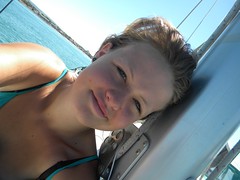
Jaime at the Mast
Jaime at the Mast
Originally uploaded by toastfloats.
A brief message from your author to let you know that even though we'll be transiting the Pacific, this blog will continue with its endlessly narcissistic accounts of the adventures of the cast and crew of s/v Don Quixote. To make sure that you don't miss any of this scintillating content, the following outlines our communication plan from April to October 2011.

Blog

Articles will appear through the next six months more or less on the same publishing schedule (twice weekly) to which you've become accustomed. However, there will now be three categories of articles:

* On the Go – We can post blog entries even from the high seas over our SSB radio/email connection. While we are passage making, I'll try to post at least a position update on a daily basis along with more extensive weekly reports on what we're doing and how we feel about it. When anchored in the islands, I'll continue with weekly articles about our experience. Unfortunately, due to bandwidth constraints, I will be unable to post pictures to most of these Coconut Milk Run articles until well after the fact. I will let you know when we get places where I can engage in wholesale uploads of images.

* Retrospective – In November 2010, I participated in NaNoWriMo. Actually, I participated in December as well though technically that's not the way NaNoWriMo works. I just kept writing until I hit 50,000 words. The result was roughly 50 articles, 30 of which I actually believe are worth editing into readability. I've queued the ones I like best to post once a week for the next six months. The articles speak to boat issues as well as our time in Mexico and New Zealand. Of course, I intended to prep these with pictures... but life intervened. More picturelessness. However, you can always head over to Flickr to browse for photos of that time frame.

* Ship Log – In February, we recommenced posting our captain's log. Historically, this is about as exciting a read as watching paint dry. Position and weather reports, equipment maintenance notes, provisioning status. *yawn* Just because it's an important part of being a sailor, doesn't make it very interesting. When the original log was stolen in New Zealand, we were incredibly glad I'd typed it up and posted it online. And oddly enough, very salty friends of ours over the years have told us they appreciate that highly factual window into our experiences as we travelled the coastline of North and South America. Perhaps, the details found there will prove interesting to cruisers considering a Puddle Jump in future years.

Comments and Replies

Sadly, we will not be able to regularly receive or respond to comments during the next few months. My sincere regrets and apologies for that. I enjoy the suggestions, support and input. Unfortunately, bandwidth is at a premium for this journey. Most places do not have connectivity, and those that do cost a fortune. However, sometimes we need your help. I've asked in the past for assistance and the reading/cruising community has come through with valuable information and even physical aid. We have arranged a shore-bound contact who will regularly read our blogs and the responses – both on the blog and on my Facebook account. Be assured that if I ask for ideas, information, or aid, this contact will relay your responses to us even if we're in the middle of nowhere.

Twitter

My original thinking was to the Twitter feed into two accounts so that the position reports would go somewhere else. Then I decided that was too complicated. It'll all spam toastfloats. The GPS points will duplicate content we post to YOTREPS. Our family and land-based emergency contacts relied on our SPOT tracking in the past, but unfortunately the SPOT doesn't have coverage in the middle of the Pacific.

Snail Mail


Really? You want to send packages? I don't think so. Let's not even pretend that's going to happen.

* * *

I think that about covers it. Please reply immediately if you have any questions. We'll be heading out in just another few days so this is your last chance to let me know we're insane.

Saturday, December 11, 2010

Good Crew

It Was His Idea
It Was His Idea
Originally uploaded by toastfloats.
I wouldn't say that DrC and I are experts at being crew or hiring crew. We've taken on a few, volunteered ourselves on occasion. We've read numerous accounts and spent hours and hours drinking beer with both captains and crews. Over time we've developed a laundry list of attributes and behaviors which we believe make “good crew.” I'd like to offer these to readers of my blog as a starting point for a discussion. For those in particular with experience on either side, let me know what you'd add or change about this list.

A lot of being good crew is about being a courteous guest. It is also about being a competent, contributing employee. Crewing on someone else's boat can open opportunities to learn, travel, and expand your understanding of the cruising life. It is not, however, an easy role to undertake. Here are our thoughts:

Pack Light – Add-on crew doesn't live on the boat. As a result, your stuff is extra, and it will be hard to wedge into existing lockers which are chock-o-block with stuffed owned by the owner's family. Ideally, all you bring with you can fit into a single duffle which you can comfortably fit on your bunk … even when you are yourself lying in that bunk. A small day pack with your electronic toys (e.g. laptop, iPod, books) is also acceptable if it too can fit on the bunk and do double-duty as a pillow.

Be Prepared – Like a Boy Scout, assume responsibility for your own gear. From foulies and life jacket to iPod/laptop chargers and reading material, supply it yourself. Ask the captain in advance regarding linens (towels, bedding), fishing gear, and items. Personally, I'd also take my own GPS, charting tools, handheld VHF, and personal EPIRB since no boat can have too many redundant safety and communication systems.

Food Issues – It is really amazing how many captain-crew relationships die on the issue of food. Set expectations between you and the captain regarding your dietary requirements, food preparation, and clean up responsibilities before you leave the first port and the last grocery store. The more open-minded and less picky an eater you are, the better. And while you shouldn't expect surf-and-turf with fine cabernets every night, you should be fed well. At minimum, crew and captain should eat from the same trough – and yes, we have heard of boats with the captain drinking the expensive chardonnay and the crew expected to survive on reconstituted gatorade drink mix. If you have special, specific dietary requirements, it is your responsibility to be up front in advance. For some items such as your favorite salad dressing, salsa, or tea, bring your own. Someday remind me to explain to you why I must have rice cakes during night helm watches.

Set Expectations in Advance – The pre-negotiation required for food can and should be extended to just about every boat issue. In particular, make sure you understand what the captain expects regarding watch schedules and boat maintenance. You don't want to learn two days out of port that the captain plans to sand down and revarnish the teak deck during your voyage... and you've been volunteered to do the work.

You Are a Consultant – I have a rule as a consultant which I believe applies well to being a crew member. You are on the boat because you know stuff and can do things. In exchange for your labor and expertise, you are “paid” in room, board, transportation, and sometimes even money. If you believe a captain is making a mistake and you have experience and advise to offer, it is your responsibility to do so. Once. However, if the captain chooses to ignore you and your life is not in any danger, keep your mouth shut. Captains need to break things; It's part of their learning process as both sailors and managers. The title captain – like manager, director, vice president, team lead, or doctor – does not confer infallibility, but for most newbies, it feels like it should. Only after breaking something expensive and/or inconvenient do most newly minted authority figures understand that nothing magical happened to transform them when their title changed.

When to Mutiny – On the other hand, no matter how valuable the lesson is to your manager, a captain doesn't have the right to break crew in the process. This isn't the British Navy in the 1700's. No, a boat in the middle of the ocean isn't a democracy. But if your life is in danger and your captain is a royal flaming idiot, you have the right to mutiny. We read about these accounts in sailing magazines, online, and in books. Sometimes, you really have no other choice. While I don't want to blame the victim, my recommendation here is not get on a boat with a captain whose expertise is considerably below your own AND the captain appears to be completely disinterested in taking your recommendations in serious conditions. Hard to figure that out in advance; Try anyway.

Take the Drugs – If you have any tendency to nausea, start taking Meclazine a day before you board. Keep taking it until I tell you to stop. If you start to feel gimpy, take the drugs immediately. Do not use the trip as an opportunity to experiment with holistic herbs, naturopathic patches, acupressure bands, or tantric chants. Unless you know that one or more of these work on you already, save them for your own boat. You have the right to drive your own family nuts, but you have a responsibility on someone else's boat to not vomit on the cabin sole if you can possibly avoid it.

Pitch In – As crew, you should help whenever and where ever you can. Show up prior to departure ready to assist with loading and provisioning. Contribute to cooking, K.P. and boat maintenance during the journey. Don't leave the boat on arrival until the boat is clean and buttoned down tight. Your contributions will ease relations between you and the rest of the crew. More practically, it'll give you something to do and an opportunity to see that the work is done carefully and correctly the first time.

Our New Electric Guitar
Originally uploaded by toastfloats.
Entertain – Find some way to contribute to the social well-being of your boat as well. Do you play an instrument? Sing? Tell stories? You could bring cards or small, lightweight games such as Yahtzee, chess or mancala. Be generous with the use of the media – music, books, or movies – that you packed. Maybe no one will take you up on your social offers, but the offers nevertheless indicate your desire and willingness to be a part of the lives your fellow travelers.

* * *

Now your turn. What would you add, remove or change about this list?

Sunday, October 10, 2010

Don't Buy My Boat

Over There
Over There
Originally uploaded by toastfloats.
Someone made an offer for Don Quixote recently. The offer was nearly 25% below our asking price. What does this tell you?

First, it is clear that our beautiful Don Quixote is like 30% of the American housing market; Our boat is under water. Not literally, thank you Neptune, but economically. We can sell the boat for less than the outstanding balance on her ridiculously high mortgage. I don’t mean to imply that the boat market was anything like the bubble of the housing market. The problem relates more to the fact that giving the banks one trillion dollars to fix the financial markets did nothing for the American housing market… and more to the point it did nothing for the mortgage markets. The banks are just sitting on all that cash. They are certainly not going to lend any of it to someone who wants to buy a boat in Mexico.

The second message is that we must not really want to sell the boat, because all we did on hearing the offer was snort. We didn’t even bother to counter. If we were serious about selling Don Quixote, we would have come back with something halfway between the ask and the offer. Yet, DrC and I didn’t even talk about it. I read him the email over coffee Saturday morning, he shrugged, I emailed back to the broker a “no thanks.” I believe the broker was completely put out when further queries produced not even a hint of a whiff of a sniff of a counter on our part.

We’re not stupid enough to believe any longer that Don Quixote is worth our asking price. A lesson learned long ago when we were in the market to purchase a practice is that anything – business, boat, home, or bag of chips – is worth precisely what people are willing to pay for it. You can believe your business is worth a half million, but if the only offer you have on the table is for 200K, then your practice is worth 200K. No amount of wishful thinking, protests, or detailed accounting analytics can change this basic, fundamental economic principle. So while Don Quixote is worth a good chunk more than that low ball offer, she is nevertheless not worth our ask. This is actually a truism of almost any ask, because you always build into your asking price a bit of room for negotation. Nevertheless, we can only come to the depressing conclusion that the bottom is out of the boat market, and our beautiful condomaran is going to be a huge net loss when we finally go to sell her.

A third conclusion that inevitably falls out of this experience is that our hand is not being forced regarding our sailing return to New Zealand. If we really didn’t want to do this, here’s the perfect out. We sell the boat, clear the mortgage with a bit of extra cash, and then we are free to do whatever we want. We could return to New Zealand, move to Australia, buy backpacks and shelp around Europe, or follow in the tire treads of my hero Nancy and her family.

Where I Belong
Where I Belong
Originally uploaded by toastfloats.
So now we have to admit to our family and our friends that our reluctant acquiesence to economic inevitability requiring a trek across the Pacific is not reluctant at all. We are not doing this because we have no choice, we are going to Puddle Jump because we want to go.

Puddle Jumping is absolutely welcome-to-the-next-level in the cruising game. Granted, the Coconut Milk Run, as it is known, is one of the easiest and most boring ocean crossings on the entire globe. On the other hand, it’s still over three weeks at sea striking out for a speck of an island in the middle of nowhere. And no one will question the high challenge factor of the Tonga to New Zealand leg across the east end of the Tasmin Sea. That bit of ocean has eaten a truly depressing number of boats. We can’t go about this half-assed.

So now I start reinvigatoring my cruising persona, this blog, my web site, and the boat. This kicks off the first of the “Preparing for the Crossing” posts. There is no backing out now. We just told the world, “Don’t buy my boat.” Forward is the only direction left to us.

Sunday, August 08, 2010

When You Can't Sell, You Sail

Comrades in Drumming
Originally uploaded by toastfloats.
Don Quixote has now been for sale since the beginning of the year. The news on that front is pretty grim. It's not her fault, beautiful boat that she is. The problem is a combination of the horrible market and the horrible state of the banking industry. It is just about impossible to get a mortgage on an expensive boat, let alone a boat bobbing in foreign waters. So there you go. No sale for the sail.

In our case, simple mathematics tells us that if we can't sell her, we have to live on her. Why? Because to pay the mortgage, maintenance and insurance on Don Quixote is about the same as owning a standard suburban home and more than renting the same. We can't really afford to maintain two households. Don Quixote needs to be our home, or she needs to belong to someone else.

This is actually a rather interesting exercise in decision tree logic.

1) Can you sell the boat? YES | NO
- If yes, all the world is your oyster. Go have fun.
- If no, you must move aboard. Go to 2.

2) Can you live aboard without making money? YES | NO
- If yes, move back aboard and go cruising. Have fun. See you in a few years.
- If no, you must find a place to live aboard and make money. Go to 3.

3) Make a list of cities to which you can sail in the amount of time you have money left in the bank account and in which you can both live aboard and make more money:
San Diego, San Francisco, Seattle, Vancouver, Sydney, Brisbane, Auckland.

4) Branch each city and ask the following question: Do I wanna?
- If no, remove from list. Remember that saying no to some cities is politically dangerous with friends and family so be prepared to deal with the fallout.
- If yes, apply for jobs. Whichever city comes up with the best money/lifestyle choice, go there.

It feels like a bit of a rinse and repeat action with DrC once again applying for jobs abroad while I continue more or less in vain to find technical writing contracts which I can undertake from the deck of a boat any time any place. Those who play Brain Age and are on the sharps have already noticed that San Diego, San Francisco, and Seattle got booted from the list since DrC is only applying for "jobs abroad." I'm afraid we are just not ready to go back to the United States. Part of me wonders if we'll ever be ready for the U.S. again since every time we're given the perfect opportunity to repent our wicked ways and return to American soil, we run screaming in the opposite direction. While this requires some introspection and probably a series of blog entries, navel gazing will have to wait.

Scenic Smell
Scenic Smell
Originally uploaded by toastfloats.
There is a strong probability that DrC can renew his existing contract at a clinic near Auckland. We like this idea. It's simple, it's familiar, and it's almost a lock. But in this world of shaky economics and in the face of a dwindling supply of ready blunt in the Don Quixote bank account, "almost" is just not good enough. So we are also working to secure positions in Sydney, Brisbane, and possibly even in Samoa or the Cook Islands. All of these are attainable from the west coast of Mexico, all of these locations periodically hire American trained eye doctors, and in all of these places we can live and work on the boat. New Zealand is at the top of the list, however, mostly because our eldest child has reached that stage in life where she has a Plan of her own. This Plan is ambitious and would result in her being qualified to attend New Zealand universities before her family sails away again. And as painful as that separation is to contemplate, the strength, sanity and sheer ambition of this Plan is impressive and inspirational to the rest of the family and worthy of going a bit out of our way to enable.

Though, I'll grant you that another 2,200 miles south from Tonga is probably more than a "bit out of our way."

So as we fast approach our first spring Halloween (which is just Wrong, by the way), it is increasingly clear that s/v Don Quixote is going to join the Coconut Milk Run. Yesterday, I listed our boat with the Pacific Puddle Jumpers 2011. It's time to start ordering parts.

Monday, June 21, 2010

A Matter of Perspective

We Contemplate the Entrance
We Contemplate the Entrance"
Originally uploaded by toastfloats.
A classical education familiarizes the attentive student with the geographical distortions inherent in all maps of our beautiful Earth which are not projected on to a spinning globe. The most famous, of course, is the distortion of the Mercator projection map model wherein Greenland looks like it could swallow North America while Europe looks like it could fit into Washington state. I’m not really much more impressed with the Gall-Peters projection which makes the globe look like it’s having a really sad, depressing and long faced day… though I’ll grant you the relative sizes of the continents are an improvement.

It turns out that there are all sorts of map models. There is one that breaks the world into a bunch of equilateral triangles and one that stretches the poles lengthwise causing Central America to curve around and South America to look like it’s about nine months pregnant.

Yet, what really strikes me about all these maps is how consistently cartographers cut the world right through the Pacific. Map makers declare, “Look! A place we can slit the globe open and smear it flat without chopping any countries in half!” However, I suspect their subconscious is probably noting, “Holy frickin’ hell that’s a big ocean. Let’s just chop it into chunks and hope no one notices.” Because no matter which projection you use, no matter how you cut the world up, the Pacific is just a great big bloody ocean taking up roughly half the planet.

A little noted side-effect of this tendency to cut the Pacific in half is that you end up either chopping New Zealand in half as or losing a chunk of it in the cropping at the edge of the page or somehow failing to include it whatsoever. The result is that most northern hemispherians tend to think of New Zealand as an island off the coast of Australia. Hell, most Americans – who frequently are incapable of naming all 50 states let alone their capitals – don’t even recognize that New Zealand is a separate country. So when I flew from Australia to New Zealand the first time, I was dismayed and surprised to learn that the trip was going to take hours. Many hours and two time zones.

Cartagraphic epiphany number one: New Zealand is a very long way from Australia.

The corollary to this discovery, of course, is a reinforcement of the first argument, “Holy frickin’ hell the Pacific is a big ocean.” I dwell on this quite a bit as my husband blithely reassures me that we’re ready to sail across it next Spring, citing our good friends Hipnautical and Totem and Sea Level as proof that it can be done. Tisk tisk, DrC. Just because we can, doesn’t mean we should! It’s a really long way. Have you looked at a map recently?

But that brings us to cartographic epiphany number two: The Pacific is full of crap.

That’s both a literal and a figurative discovery, mind you. Studying oceans and marine biology with the girls, we are learning more and more depressing stuff about just how much garbage is floating around in the Pacific. There is an island of plastic larger than the state of Texas just swirling around out there waiting for the human species to come to its senses. Fortunately for mariners, it turns out this Trash Island is not a hazard to navigation for the average cruiser on the Coconut Milk Run. There are far more solid and fixed objects to worry about, however. Islands and muotos and all kinds of rocks in the middle of absolutely nowhere just ready to reach up and grab your keel. The big empty blue bits on the edge of your map are chock o’block full of ridges and mountains and plateaus and atolls. An hour with Google Earth in those blank blue bits zoomed down to about commercial airline height is quite an eye opener.

But then in Google Earth I ran into cartographic epiphany number three, which quite literally rocked my world: There is no up.

The thing is that history is written by the winners and so all human history – and hence all the maps – have been written by a bunch of northern hemispherians. Somewhere along the lines someone decided that the North pole is up, and the South pole is down. Quite literally everything flows from that assumption. But what if the cradle of human civilization had been in Australia? What if we started from islands in the middle of the Pacific? What if life actually began in Africa?... wait… it did. Um… Okay, so what if the Africans had actually been asked how they wanted to draw the map? What if South were up, and the planets actually revolved around the sun clockwise?

Serious Business
Serious Business"
Originally uploaded by toastfloats.
It is. They do.

Turns out you can flip the world upside. You can invert the entire solar system, in fact, and nothing changes but our perspective. New Zealand and Australia are in the top hemisphere, it’s Winter Solstice today, and sometime next spring we’re going to sail the boat all the way up here. It’ll be a long haul uphill against parental opposition and societal expectation. But when we arrive, we’ll be at the top of the world.

* * *

Editor's Note: I want to thank friend and reader SteveF for posting a link in the comments to this fabulous web site on upside down maps: http://flourish.org/upsidedownmap/. The article is full of fascinating information on the relative and culturally specific nature of maps and includes images of many variations. I'm embedding my personal favorite which is both upside down and does NOT cut the Pacific in half. Thank you SteveF!