As we clean up the breakfast dishes, my youngest admonishes me, "Be a tidy Kiwi, Mum."
First off… Mum? Second, what am I doing wrong now?
Aaron points at the pile of detritus from our meal making -- packaging plastic and paper, bits of vegetable ends. Rather than scooping them all into the rubbish bin, she shows me how to separate the bits into their appropriate recycling bins outside the campground kitchen.
I like to think of our family as environmentally aware. We are conscientious and do what we can to reduce our foot print on this planet. However, we are learning important lessons from New Zealand. This is a country in the grip of a recycling rage. A parallel -- and I believe largely unrelated -- movement involves removing every scrap of litter from every surface in every outdoor space throughout both islands. For these tasks, the Kiwis enlist an army of school children who are indoctrinated from birth to carefully sort their trash and are organized into brigades on a weekly basis to clean town, park, playground, street, and highway. After years of seeing the casually discarded and ubiquitous trash which mars every corner of Mexico, the absence of even so much as cigarette butts and bottle tops on the verge of highways is somewhat disconcerting.
Paradoxically to outsiders, the New Zealand opinion of its own environmental record appears highly critical… and perhaps with good reason. When the Pakehas came to this country, they found a land covered by dense forests of totara, kauri, and fern beneath which lay some of the most fertile ground in the world. So like good, white colonists on every continent, they leveled the place. It is very hard to find any of the original, native forests anywhere. As I said, this pattern is not so unusual. Look at the East coast of the United States, for example. I think what makes it harder for New Zealanders, however, is that this happened so recently. Pennsylvanians and New Yorkers can at least pretend it's not their fault -- those forests were largely gone before we hit the Civil War. We can't be responsible for something that happened 200 years ago… can we? But we on the Western coast of the United States can be more sympathetic to Pakehas who have pictures of their grandparents cutting down giant 3,000 year old kauri trees. There just isn't enough distance between the destruction of our old growth forests and our modern, environmental sensitivity. Short of planting out every cattle range and sheep grazing hill, there appears little to be done to recapture the islands as they existed 100 years ago, let alone 1,000 years ago before the fairly destructive arrival of the Maori wane.
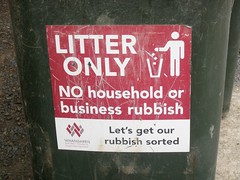
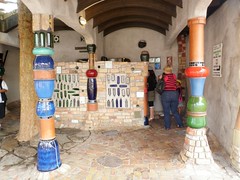
Instead, it feels as though New Zealand is channeling its not inconsiderable energy into keeping everything very clean. This country has, without any exception or qualification, the cleanest toilets in the world. Okay, maybe the Japanese are cleaner… though maybe not. I find the signs on Japanese toilets so baffling I'm never sure I'm using them correctly. In parks, there are special dog-shaped trash cans into which you are instructed to put dog poo. One the of the most highly touted tourist attractions and number 86 on the Kiwi's Must See 101 list is the Hundertwasser public toilets in Kawakawa. The towns and countryside are littered with the high-tech and fancy toilets which Seattle debated for years. Every toilet we've visited is antiseptically clean with no graffiti other than a confetti of government signs encouraging hand washing, counter wiping, and self-policing of rubbish.
My tidy Kiwi kids are already infected with this passion for cleanliness… for the most part. Jaime's bed area still looks like a tornado hit it, and the girls routinely drape wet towels, stinky socks, and dubiously clean clothing on every surface of the house unless I yell at them. Repeatedly. Constantly. Repetitively. Redundantly. Again and again. So they haven't completely adopted the New Zealand passion for cleanliness inside, but they have absorbed the message for the outside world. Slowly but surely, they are transforming the overgrown lawn and beds of Chicken House, replacing the weeds with edible landscaping in the form of winter greens, beans, and clover.
They are also starting to sound strange. "Do I really need this lecture from you, girls?"
*snort* "Wut eh vuh, mum..."

Showing posts with label environment. Show all posts
Showing posts with label environment. Show all posts
Tuesday, April 13, 2010


Monday, November 02, 2009
Cooking Tip: Use the Sun
In a comment on my last cooking tip, a cruiser-to-be noted that she was considering investing in a solar oven for her boat. I don't want to discourage such investments – if you've got room, the money and the inclination, go for it. We've been lucky enough to taste the output from s/v Totem, and it's a fine addition to any boat cruising south of San Diego. On the other hand, the sun is so intense down here, there are a great many options for solar cooking even without adding a dedicated oven to your lockers.
Sun Tea -- The most obvious thing you can do with the sun is make tea. Add two to four tea bags to a soda bottle full of water. Toss it on the tramp in the morning. Put it in the fridge in the evening. Drink chilled tea all the next day. I recommend using 2 liter green soda bottles for this purpose as the darker color takes up more heat. Any mint, black, or green tea works. Some folks profess to like the fruit teas. I'm not one of them. You can add sugar or honey as a sweetener when you set up the brewing, and it will dissolve into your tea. However, this shortens the useful life of your soda bottle. Since it's not really possible to clean the bottoms and sides of a soda bottle very easily, we get maybe a dozen batches before we give up and drink more Fresca.
Sun Coffee -- Believe it or not, you can use the exact same method to brew a decent batch of iced coffee. Add the grounds directly to the bottle then decant in the evening into a second bottle through a drip coffee filter. The only real challenge is getting the last of the grounds out of your brewing bottle.
Yogurt -- The problem with using a sun-soaked spot on the boat to make yogurt is that it gets too hot. If you've never made yogurt before, it's really easy. Don't panic. Fill a jug, jar, or pot with milk heated to 110 to 120 Fahrenheit. Drop in a big spoonful of active yogurt, usually the last bit from your previous batch or a scoop from a commercial, unsweetened, active brand. Maintain the milk at 110 to 120 degrees for several hours until it gels up. We keep ours under the helm where it is out of the sun but trapped in a hot spot under the bimini.
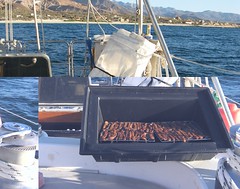
Heat Bread -- If you have a dark cookie sheet, you can do a really nice job heating and reheating breads, pastries, and tortillas. Put them on paper towels, plates, or napkins in a sunny spot on the deck. Lay the cookie sheet on top. Wait an hour. If you're willing to wait two hours, you can use this same technique to make quesdillas.
Bean Dip -- The kids invented Solar Bean Dip a few weeks ago. In a pan, layer refried beans, minced onions, shredded cheese, and olives. Sit in the sun from about noon till it's time to visit a fellow boat for the cocktail hour. Top with fresh chopped tomatoes, cilantro, salsa, and sour cream. Serve with tortilla chips or tostas.
Slow Cooking -- Combine the hyper efficiency of your pressure cooker with the insane intensity of the sun to slow cook soups, pot roasts, stews, and bean dishes. Pre-soak beans the night before. Then prepare a soup or stew in the morning. For example, the recipe may call for browning the meat and onions. Put all the ingredients in your pressure cooker and bring to pressure for at least five minutes. Without opening the pot, stick it out on the deck in a sunny spot. At dinner time, you can retrieve your pot and serve. We've averaged between 140 to 180 degrees Fahrenheit for dishes prepared in this fashion indicating that the contents of the pot were slow cooking throughout the day. In other words, the pot never drops below the routine temperature maintained by a crock pot. To date, I've used this technique to make pot roast, chowders of both vegies and meats, chili, and bean soup.
Pizza Box Oven -- If you have kids, don't buy an oven; Have them make one. These things work super well if you start with Bobolli or sliced bollo and build from there, but they do also bake raw dough. The girls recommend that you put your pizza in the “real oven” for the last 5 minutes just to get a browner, drier crust. The pizza box oven is another way to do tasty quesidillas.
* * *
Solar cooking is as much about creativity as it is about harnessing the power of the sun to cook. I have to admit, though, as I swing in the water on a line strung between the hulls trying desperately to stay cool, my real problem is figuring out why you'd want hot food to begin with.
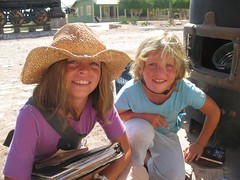
Sun Tea -- The most obvious thing you can do with the sun is make tea. Add two to four tea bags to a soda bottle full of water. Toss it on the tramp in the morning. Put it in the fridge in the evening. Drink chilled tea all the next day. I recommend using 2 liter green soda bottles for this purpose as the darker color takes up more heat. Any mint, black, or green tea works. Some folks profess to like the fruit teas. I'm not one of them. You can add sugar or honey as a sweetener when you set up the brewing, and it will dissolve into your tea. However, this shortens the useful life of your soda bottle. Since it's not really possible to clean the bottoms and sides of a soda bottle very easily, we get maybe a dozen batches before we give up and drink more Fresca.
Sun Coffee -- Believe it or not, you can use the exact same method to brew a decent batch of iced coffee. Add the grounds directly to the bottle then decant in the evening into a second bottle through a drip coffee filter. The only real challenge is getting the last of the grounds out of your brewing bottle.
Yogurt -- The problem with using a sun-soaked spot on the boat to make yogurt is that it gets too hot. If you've never made yogurt before, it's really easy. Don't panic. Fill a jug, jar, or pot with milk heated to 110 to 120 Fahrenheit. Drop in a big spoonful of active yogurt, usually the last bit from your previous batch or a scoop from a commercial, unsweetened, active brand. Maintain the milk at 110 to 120 degrees for several hours until it gels up. We keep ours under the helm where it is out of the sun but trapped in a hot spot under the bimini.
Heat Bread -- If you have a dark cookie sheet, you can do a really nice job heating and reheating breads, pastries, and tortillas. Put them on paper towels, plates, or napkins in a sunny spot on the deck. Lay the cookie sheet on top. Wait an hour. If you're willing to wait two hours, you can use this same technique to make quesdillas.
Bean Dip -- The kids invented Solar Bean Dip a few weeks ago. In a pan, layer refried beans, minced onions, shredded cheese, and olives. Sit in the sun from about noon till it's time to visit a fellow boat for the cocktail hour. Top with fresh chopped tomatoes, cilantro, salsa, and sour cream. Serve with tortilla chips or tostas.
Slow Cooking -- Combine the hyper efficiency of your pressure cooker with the insane intensity of the sun to slow cook soups, pot roasts, stews, and bean dishes. Pre-soak beans the night before. Then prepare a soup or stew in the morning. For example, the recipe may call for browning the meat and onions. Put all the ingredients in your pressure cooker and bring to pressure for at least five minutes. Without opening the pot, stick it out on the deck in a sunny spot. At dinner time, you can retrieve your pot and serve. We've averaged between 140 to 180 degrees Fahrenheit for dishes prepared in this fashion indicating that the contents of the pot were slow cooking throughout the day. In other words, the pot never drops below the routine temperature maintained by a crock pot. To date, I've used this technique to make pot roast, chowders of both vegies and meats, chili, and bean soup.
Pizza Box Oven -- If you have kids, don't buy an oven; Have them make one. These things work super well if you start with Bobolli or sliced bollo and build from there, but they do also bake raw dough. The girls recommend that you put your pizza in the “real oven” for the last 5 minutes just to get a browner, drier crust. The pizza box oven is another way to do tasty quesidillas.
* * *
Solar cooking is as much about creativity as it is about harnessing the power of the sun to cook. I have to admit, though, as I swing in the water on a line strung between the hulls trying desperately to stay cool, my real problem is figuring out why you'd want hot food to begin with.
Thursday, October 15, 2009
The Fittest
Editor's Note: Published today to support Blog Action Day 2009 an annual event held every October 15 that unites the world’s bloggers in posting about the same issue on the same day with the aim of sparking discussion around an issue of global importance. This year the theme is climate change.
Just how much of this planet is inhabitable? I suppose that as with so many other factoids, this bit of data is Googleable. On the other hand, it is a very sobering thought exercise to engage in as you travel. Since April, we've been traveling in the Sea of Cortez, up the Baja Peninsula, and through the American Southwest. And while much of it has been stunningly beautiful, very little of it is truly inhabitable. We are talking about a vast area stretching from La Paz to the Colorado Plateau, over to Death Valley, up through central Nevada, and all of Utah.
Of course, people do live here. Phoenix is the 12th most populous cities in the United States. Believe it. Wiki says so. There are oases of cool mountains and tree filled valleys. We tromped through ruins nearly 2,000 years old giving silent testimony to the presence of humans for millennia in these barren dry lands.
But I challenge anyone to drive across this countryside day after day without coming to the sober realization that most of the land is too dry to support and sustain life over the long haul. Communities like Hurricane and Farmington and Mesquite – booming now as snow birds flee south and subsisting on deep reservoirs of ground water built over the eons from the seepage of limited rains through thousands of feet of sandstone – these places terrify me.
What are these people thinking? The water will not last forever. It won't even last a generation. DrC just shakes his head as we drive by WalMarts and Burger Kings, Subway, Chevron, and Sonic Burger, “The shape of future ghost towns.” I can almost see the dust and sand and tumbleweeds blowing down the central street, the laundromat door creaking back and forth, a shopping cart catching the wind and rolling a few feet before banging into the wall of the empty casino.
Water is life, and there simply isn't enough to sustain the population here today let alone accommodate the vast numbers of people city planners seem hell bent in seducing down here. “Live where you vacation!” trumpets a road sign in Fredonia. “Retire in style!!” blasts another in St. George. The vivid green grass of these developments glows sharp and unnatural against the dessert background of tans, corals, pinks, and grays. People retiring from Indiana expect a lawn, those from Pennsylvania want to golf. Never mind that water falls in summer deluges to a depth of feet each year up north while these warm, sunny southern wastelands are prone to decades long droughts and the average in even a good year barely tops an inch.
I don't expect these invaders to understand. They will recycle their cans and bottles, install low flow toilets, and call themselves environmentalists. All the cues of government, industry, and public policy encourage them in their delusional belief that they can endlessly flock down here each winter like a pack of wild birds to live harmoniously with nature during their declining years. No one is facing the harsh demographic hard stop date when the water runs out, and the land forces out all but the natives.
How many other places on our overburdened planet are like this? How many other myths are we spinning to comfort ourselves when we push into areas not meant to support our species? I see more clearly the disaster on the horizon than ever before. Even in the absence of global climate change, humans are fast approaching the tipping point. Driving across this great barren expanse, I am filled with a grinding horror at what my girls face in the coming decades. It is not enough to teach them math and science and history. We need to teach them how to survive what's coming.
Just how much of this planet is inhabitable? I suppose that as with so many other factoids, this bit of data is Googleable. On the other hand, it is a very sobering thought exercise to engage in as you travel. Since April, we've been traveling in the Sea of Cortez, up the Baja Peninsula, and through the American Southwest. And while much of it has been stunningly beautiful, very little of it is truly inhabitable. We are talking about a vast area stretching from La Paz to the Colorado Plateau, over to Death Valley, up through central Nevada, and all of Utah.
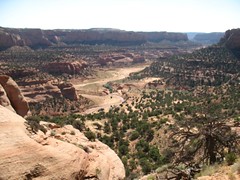
Of course, people do live here. Phoenix is the 12th most populous cities in the United States. Believe it. Wiki says so. There are oases of cool mountains and tree filled valleys. We tromped through ruins nearly 2,000 years old giving silent testimony to the presence of humans for millennia in these barren dry lands.
But I challenge anyone to drive across this countryside day after day without coming to the sober realization that most of the land is too dry to support and sustain life over the long haul. Communities like Hurricane and Farmington and Mesquite – booming now as snow birds flee south and subsisting on deep reservoirs of ground water built over the eons from the seepage of limited rains through thousands of feet of sandstone – these places terrify me.
What are these people thinking? The water will not last forever. It won't even last a generation. DrC just shakes his head as we drive by WalMarts and Burger Kings, Subway, Chevron, and Sonic Burger, “The shape of future ghost towns.” I can almost see the dust and sand and tumbleweeds blowing down the central street, the laundromat door creaking back and forth, a shopping cart catching the wind and rolling a few feet before banging into the wall of the empty casino.
Water is life, and there simply isn't enough to sustain the population here today let alone accommodate the vast numbers of people city planners seem hell bent in seducing down here. “Live where you vacation!” trumpets a road sign in Fredonia. “Retire in style!!” blasts another in St. George. The vivid green grass of these developments glows sharp and unnatural against the dessert background of tans, corals, pinks, and grays. People retiring from Indiana expect a lawn, those from Pennsylvania want to golf. Never mind that water falls in summer deluges to a depth of feet each year up north while these warm, sunny southern wastelands are prone to decades long droughts and the average in even a good year barely tops an inch.
I don't expect these invaders to understand. They will recycle their cans and bottles, install low flow toilets, and call themselves environmentalists. All the cues of government, industry, and public policy encourage them in their delusional belief that they can endlessly flock down here each winter like a pack of wild birds to live harmoniously with nature during their declining years. No one is facing the harsh demographic hard stop date when the water runs out, and the land forces out all but the natives.

How many other places on our overburdened planet are like this? How many other myths are we spinning to comfort ourselves when we push into areas not meant to support our species? I see more clearly the disaster on the horizon than ever before. Even in the absence of global climate change, humans are fast approaching the tipping point. Driving across this great barren expanse, I am filled with a grinding horror at what my girls face in the coming decades. It is not enough to teach them math and science and history. We need to teach them how to survive what's coming.
Friday, February 15, 2008
Doing More With Less - Soap
The boat teaches many lessons in conservation. This is the second in a series of posts about how we boaters do more with considerably less. The tips are valid for land based life as well, though, so hopefully folks can use some of these ideas.
* * *
Have you ever seen a street drain with a little fish painted next to it? The fish tells you that anything you pour down that drain goes directly to a natural, nautical environment, be it creek, river, lake, or ocean. The objective of the fish relief is to make you feel guilty about pouring paint, machine oil, and dish soap down the drain.
I suspect as a public policy, the fish are a failure. It is difficult for the average American to comprehend the connection between his driveway and a river nearly a mile away.
Living on the boat, it is considerably more difficult to ignore the connection between drain and fish. For one thing, every morning you can watch the toothpaste spit emerge from a thru hull and dribble down the side of your boat to float in lily pads of minty fresh goodness. Scrubbing down the boat during an average boring passage produces a wake of cheerfully bobbing soap bubbles while dishwashing at anchor results in a bathtub ring of food particles and bacon grease adhering to your hull like the ghosts of dinners past.
So guilt alone drove the family to consider how we could clean things without killing fish. Ultimately, it comes down to that old saw, “The solution to pollution is dilution.”
Dilute Everything – There is not a single soap product distributed anywhere that is not packaged in solutions that are a minimum of ten times stronger than required to do the job. Now the environmentally friendly packages such as Seventh Generation and Simple Green explicitly tell you this. It turns out, though, that the 1:10 ratio works for everything from window cleaner to hair conditioner.
In fact, there are products you can dilute at an even higher ratio. Ivory dish soap, for example, can be diluted in a ratio of roughly 1:30. We put about a half ounce in the bottom of a small bottle and fill it up with fresh water, returning the “source” to the storage locker.
Use Less – Even diluted, you are still using too much. Whenever you can, don't put the soap in water. Don't put it in a bucket or a sink. Instead, apply the soap directly to either the item being scrubbed or a scrubbing device. That little bottle of diluted dish soap lasts us for nearly two weeks through the simple expedient of never putting the soap on either the dishes or in the sink water. We apply it the sponge and can generally make it through an entire meal's worth of dishes with two small applications.
Use Something Else – Very dilute vinegar is a great cleanser. Salt water is surprisingly cleanifying. Elbow grease and fresh water do wonders.
Warm the Water – I have no idea why, but soaps like warm water. You probably know that dish soap positively FOAMS when it hits hot water. However, the same is true of shampoo, laundry soap, and toothpaste. It's hard to get used to brushing with warm water, but you can get much cleaner teeth with much less paste if you do so. For shampoo, foam it up in your hands with hot water before slapping it on your head.
Make Your Own – For Winter Solstice this year, Dr C made soap for all the ladies in his life. From this exercise, we learned a few very valuable things:
Do Without – There are a lot of things we clean in the Real World which just stay dirty on the boat. It turns out that disinfecting everything is probably doing more harm than good in any case, creating nasty antibiotic- and disinfectant-resistant bacteria. There is no fear of that on our boat. I can't think of a single sanitary item on the entire vessel.
* * *
I think everyone should live for a week watching their every effluent, body fluid, and ounce of waste water float behind their home in sludgy, gray pools. It would take a very hard hearted or extraordinarily stupid person to fail get the hint. Soap is not good; it blows bubbles.
* * *
Have you ever seen a street drain with a little fish painted next to it? The fish tells you that anything you pour down that drain goes directly to a natural, nautical environment, be it creek, river, lake, or ocean. The objective of the fish relief is to make you feel guilty about pouring paint, machine oil, and dish soap down the drain.

I suspect as a public policy, the fish are a failure. It is difficult for the average American to comprehend the connection between his driveway and a river nearly a mile away.
Living on the boat, it is considerably more difficult to ignore the connection between drain and fish. For one thing, every morning you can watch the toothpaste spit emerge from a thru hull and dribble down the side of your boat to float in lily pads of minty fresh goodness. Scrubbing down the boat during an average boring passage produces a wake of cheerfully bobbing soap bubbles while dishwashing at anchor results in a bathtub ring of food particles and bacon grease adhering to your hull like the ghosts of dinners past.
So guilt alone drove the family to consider how we could clean things without killing fish. Ultimately, it comes down to that old saw, “The solution to pollution is dilution.”
Dilute Everything – There is not a single soap product distributed anywhere that is not packaged in solutions that are a minimum of ten times stronger than required to do the job. Now the environmentally friendly packages such as Seventh Generation and Simple Green explicitly tell you this. It turns out, though, that the 1:10 ratio works for everything from window cleaner to hair conditioner.
In fact, there are products you can dilute at an even higher ratio. Ivory dish soap, for example, can be diluted in a ratio of roughly 1:30. We put about a half ounce in the bottom of a small bottle and fill it up with fresh water, returning the “source” to the storage locker.
Use Less – Even diluted, you are still using too much. Whenever you can, don't put the soap in water. Don't put it in a bucket or a sink. Instead, apply the soap directly to either the item being scrubbed or a scrubbing device. That little bottle of diluted dish soap lasts us for nearly two weeks through the simple expedient of never putting the soap on either the dishes or in the sink water. We apply it the sponge and can generally make it through an entire meal's worth of dishes with two small applications.
Use Something Else – Very dilute vinegar is a great cleanser. Salt water is surprisingly cleanifying. Elbow grease and fresh water do wonders.
Warm the Water – I have no idea why, but soaps like warm water. You probably know that dish soap positively FOAMS when it hits hot water. However, the same is true of shampoo, laundry soap, and toothpaste. It's hard to get used to brushing with warm water, but you can get much cleaner teeth with much less paste if you do so. For shampoo, foam it up in your hands with hot water before slapping it on your head.
Make Your Own – For Winter Solstice this year, Dr C made soap for all the ladies in his life. From this exercise, we learned a few very valuable things:
- Soap is easy to make.
- Triple the quantity of fragrance you think you need.
- Homemade soap is better for the environment than the store bought stuff since it's made of essential oil, lye, olive oil, and lard. That's it.
- The stuff feels absolutely great on the skin.
Do Without – There are a lot of things we clean in the Real World which just stay dirty on the boat. It turns out that disinfecting everything is probably doing more harm than good in any case, creating nasty antibiotic- and disinfectant-resistant bacteria. There is no fear of that on our boat. I can't think of a single sanitary item on the entire vessel.

* * *
I think everyone should live for a week watching their every effluent, body fluid, and ounce of waste water float behind their home in sludgy, gray pools. It would take a very hard hearted or extraordinarily stupid person to fail get the hint. Soap is not good; it blows bubbles.
Sunday, November 25, 2007
Subscribe to THIS - The Green Life
Any sailor that is not also a bit of an enviro fantatic is quite literally missing the point. Sailing and the cruising life are probably the most perfect living lesson for how to reduce your environmental footprint yet invented. Did you know the average American uses 200 gallons of fresh water per day? Did you know that Don Quixote's water tank for 5 people for 4 days is only 80 gallons? Tell me you don't learn really quickly how to do more with less when you live on a boat.
Yet, you can always learn more. The conservation movement offers sailors endless ideas for how to make our boat lives simpler and more environmentally sensitive. There are products available to us now thanks to the efforts of the E.U. to reduce carbon use that were not available a mere ten years ago.

To keep up with all these changes and ideas, I subscribe to a daily blog sponsored by the Sierra Club called The Green Life. It mixes proselytizing of The Environmental Movement with generally useful tips on how to decrease water and power use, find less caustic products to clean our stuff and selves, and where to find the latest in green tech. And while some is not applicable to our lives, much we already “do even more with considerably less”, about once a week I get a great tip that I turn around and apply on our boat. Example? This Oct 16 tip on how to replace chemical mothballs with pungent herbs.
Yet, you can always learn more. The conservation movement offers sailors endless ideas for how to make our boat lives simpler and more environmentally sensitive. There are products available to us now thanks to the efforts of the E.U. to reduce carbon use that were not available a mere ten years ago.

To keep up with all these changes and ideas, I subscribe to a daily blog sponsored by the Sierra Club called The Green Life. It mixes proselytizing of The Environmental Movement with generally useful tips on how to decrease water and power use, find less caustic products to clean our stuff and selves, and where to find the latest in green tech. And while some is not applicable to our lives, much we already “do even more with considerably less”, about once a week I get a great tip that I turn around and apply on our boat. Example? This Oct 16 tip on how to replace chemical mothballs with pungent herbs.
Subscribe to:
Posts (Atom)